


Let AI summarize this article for you

As retail and supermarket chains continue to expand, inventory management becomes significantly more difficult to control manually. Modern retailers must coordinate replenishment across physical stores, e-commerce channels, dark stores, regional warehouses, and distribution centers — often within a single unified supply chain.
In a highly dynamic demand environment, traditional static planning leads to chronic imbalances — excess slow-moving inventory at some retail stores alongside frequent stockouts of fast-turnover items at other locations. Achieving sustainable target service levels and profitability requires true end-to-end automatic inventory replenishment across all supermarkets and distribution centers.
Why Retailers Need Specialized Automatic Replenishment Software
Most traditional replenishment approaches rely on rigid, static profiles that lack the flexibility and intelligence required for modern multi-format retail. Retano SCM was purpose-built as a dedicated automatic replenishment solution to address these limitations.
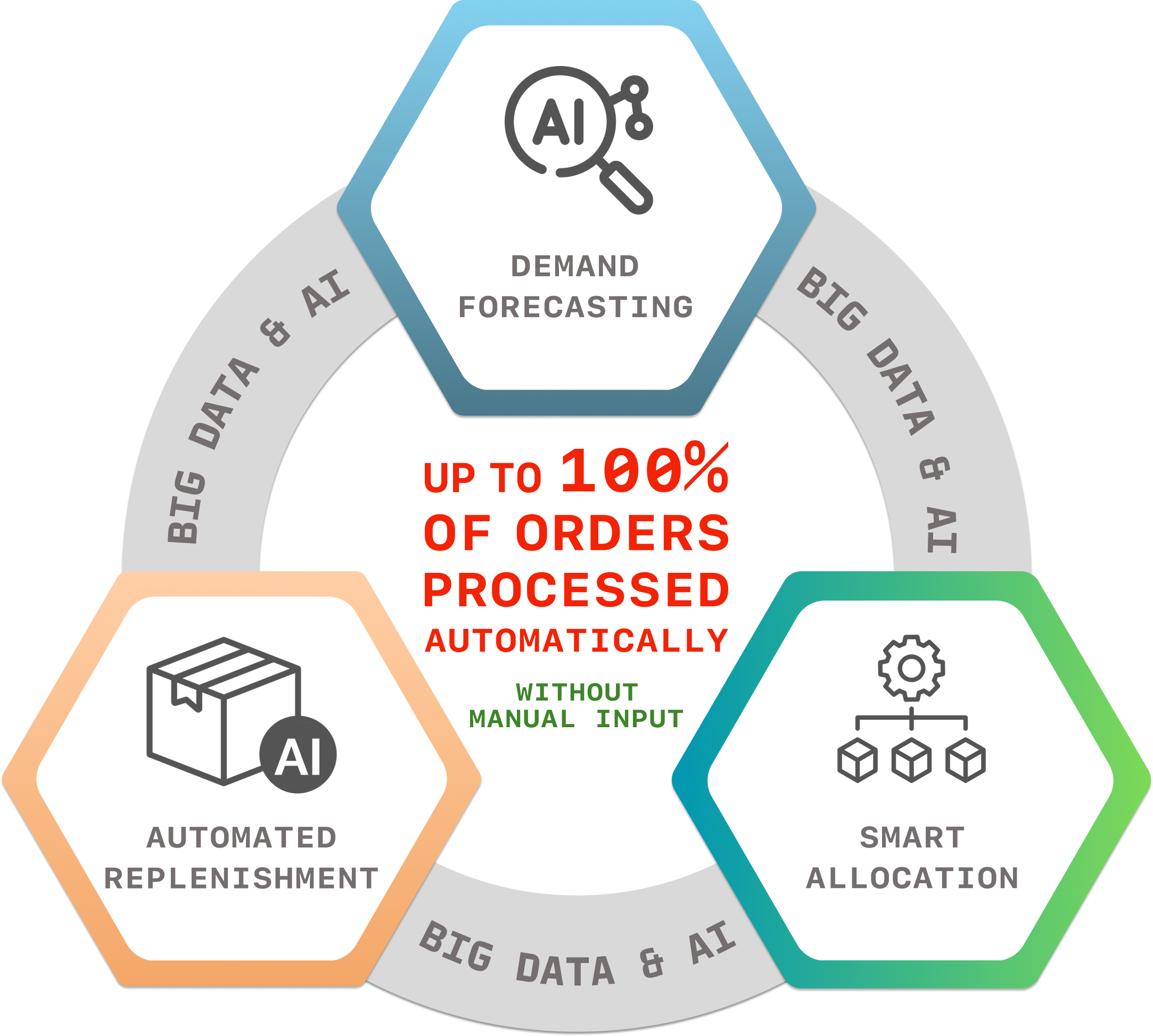
By integrating advanced Artificial Intelligence technologies, including Machine Learning, Deep Learning, NLP, and rule-based AI with continuous system learning, the platform processes large-scale transactional data from all physical stores nightly.
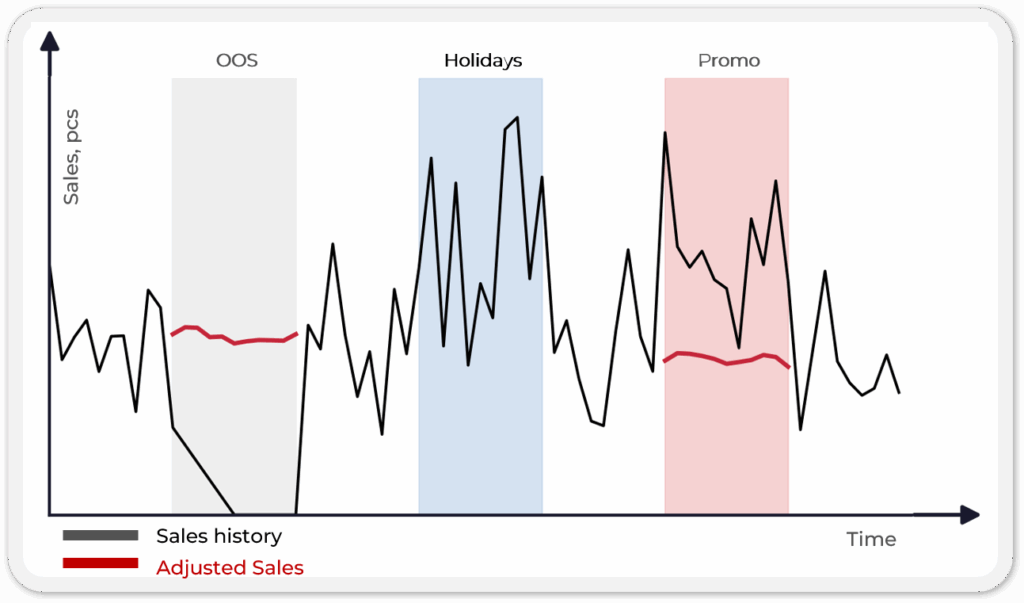
How the SCM Solution cleanses Demand Signals:
- Anomalous Sales Spikes: Automatically filters out one-off bulk purchases.
- Promotional Uplifts: Separates baseline demand from promo-driven peaks.
- Out-of-Stock (OOS) Periods: Reconstructs lost demand during periods of empty shelves to prevent future under-ordering.
This cleaned baseline enables high-fidelity demand modeling across all channels in the supply chain — physical retail stores, e-commerce, and wholesale — generating fully optimized replenishment orders that require only final managerial approval.
The Challenges of Multi-Level Supply Chain Management
Multi-level replenishment (or multi-echelon inventory planning) is a more advanced approach compared to traditional isolated planning models.
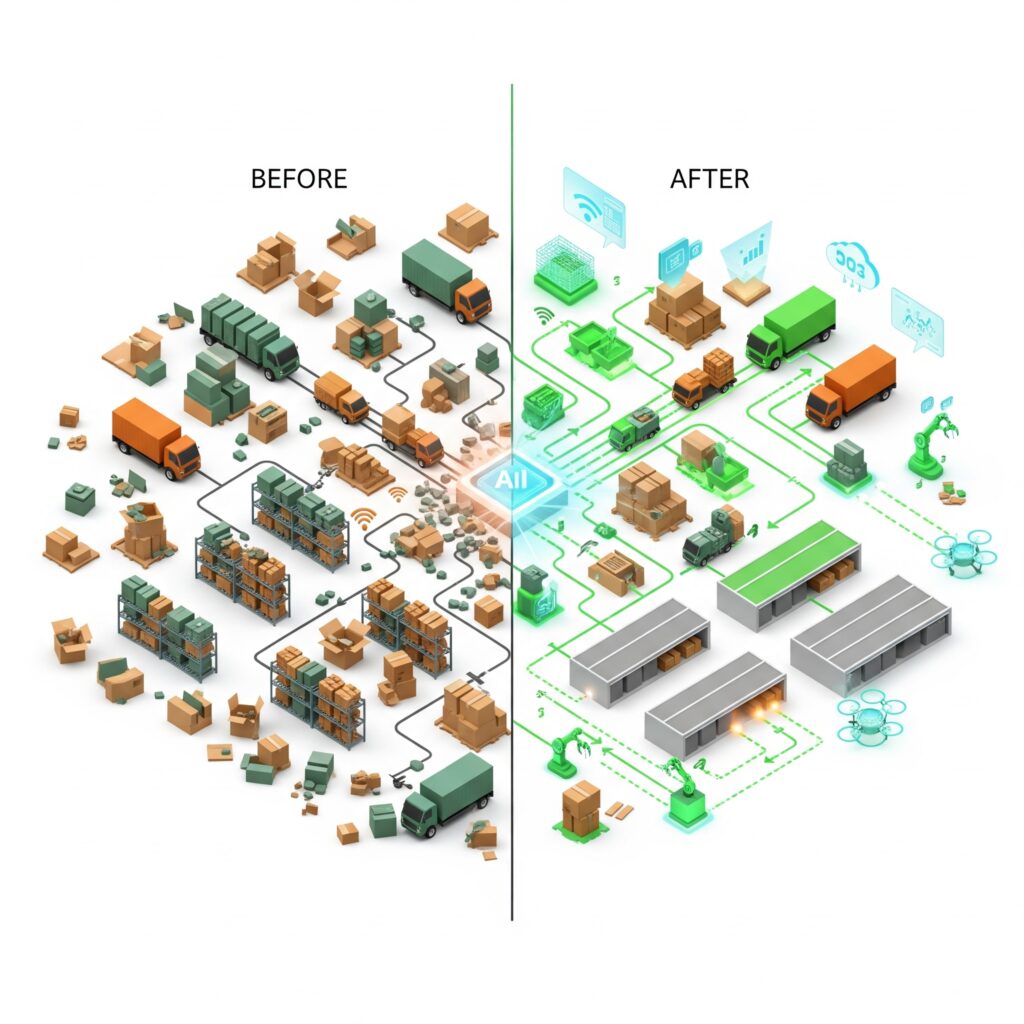
In a single-echelon system, each part of the supply chain — stores, regional warehouses, and distribution centers — works separately. Stores only see their own stock levels, while warehouses only see store orders instead of real customer demand. This lack of visibility creates the bullwhip effect, where small changes in demand become much larger higher up in the supply chain. As a result, warehouses may have too much stock while stores face out-of-stock situations.
A multi-level replenishment approach in Retano SCM works differently. It manages the entire supply chain as one connected system. Instead of keeping extra safety stock at every level, inventory is optimized across the network. This helps reduce excess inventory while improving product availability across stores.
At the same time, managing a multi-level supply chain is complex because retailers must consider:
- variable supplier lead times
- varying delivery schedules
- transport capacity constraints
- MOQ and pack size requirements
Inventory Optimization through flexible Replenishment Algorithms
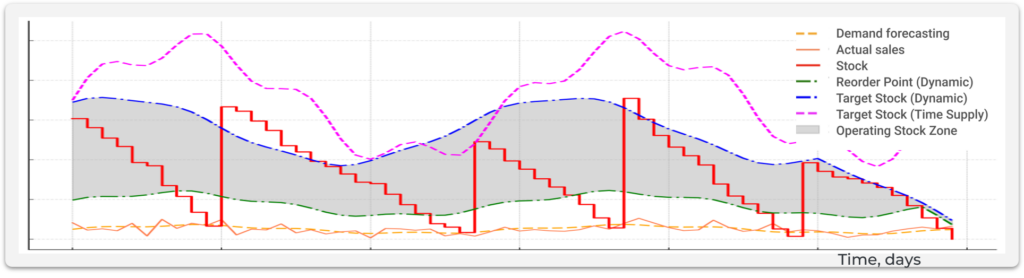
By default, Retano SCM uses Dynamic Replenishment — an intelligent replenishment approach that continuously balances inventory levels, product availability, supplier constraints, and operational efficiency across the entire retail network.
In practice, this approach works effectively for the vast majority of retail assortments, especially in fast-moving supermarket and grocery environments where static replenishment rules quickly become inefficient.
At the same time, the platform remains fully flexible. Supply chain teams can configure alternative replenishment methods for specific categories, stores, suppliers, or individual SKUs whenever operational requirements demand it.
This allows retailers to combine centralized automation with operational flexibility, using different replenishment approaches where they make the most business sense.
Fresh Product Management & Perishable Inventory Optimization
For fresh product management (perishable, fresh, and ultra-fresh categories in food retail and supermarkets), Retano SCM implements advanced virtual batch tracking within the supply chain.
How it works: The system maintains dynamic shelf-life profiles for each lot, modeling inventory erosion according to FIFO/LIFO principles and actual sales velocity. When predictive models indicate that a batch in grocery stores is at risk of expiring before sell-through, it automatically excludes that quantity from available inventory calculations for subsequent replenishment cycles.
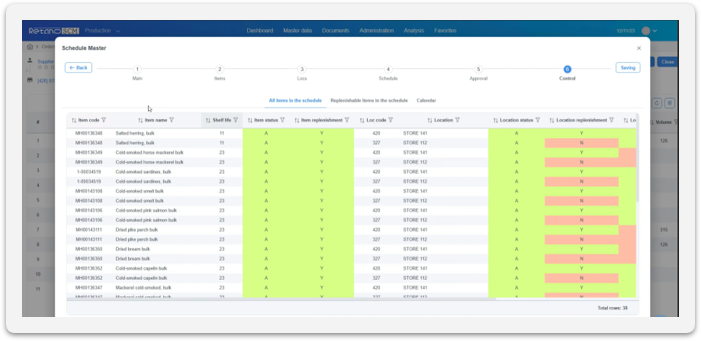
Additionally, for ultra-fresh categories with in-store production, native Bill of Materials (BOM) support enables simultaneous multi-level demand calculation for finished goods and raw ingredients, supporting multiple intra-day replenishment waves across the supermarket supply chain.
Retano SCM Impact: Measurable Business Benefits
Retailers implementing Retano SCM for automatic inventory replenishment and retail inventory optimization typically achieve:
- Increased product availability: reducing stockouts (OOS) by 20–40%
- Freed up working capital: lowering average inventory levels by 15–25%
- Reduced manual interventions: shifting to true exception-based management