


Retano SCM
Demand forecasting & Replenishment solution
From raw sales data to approved orders — the full replenishment cycle, powered by AI
Let AI summarize this article for you

Less Manual Work. More Profit.
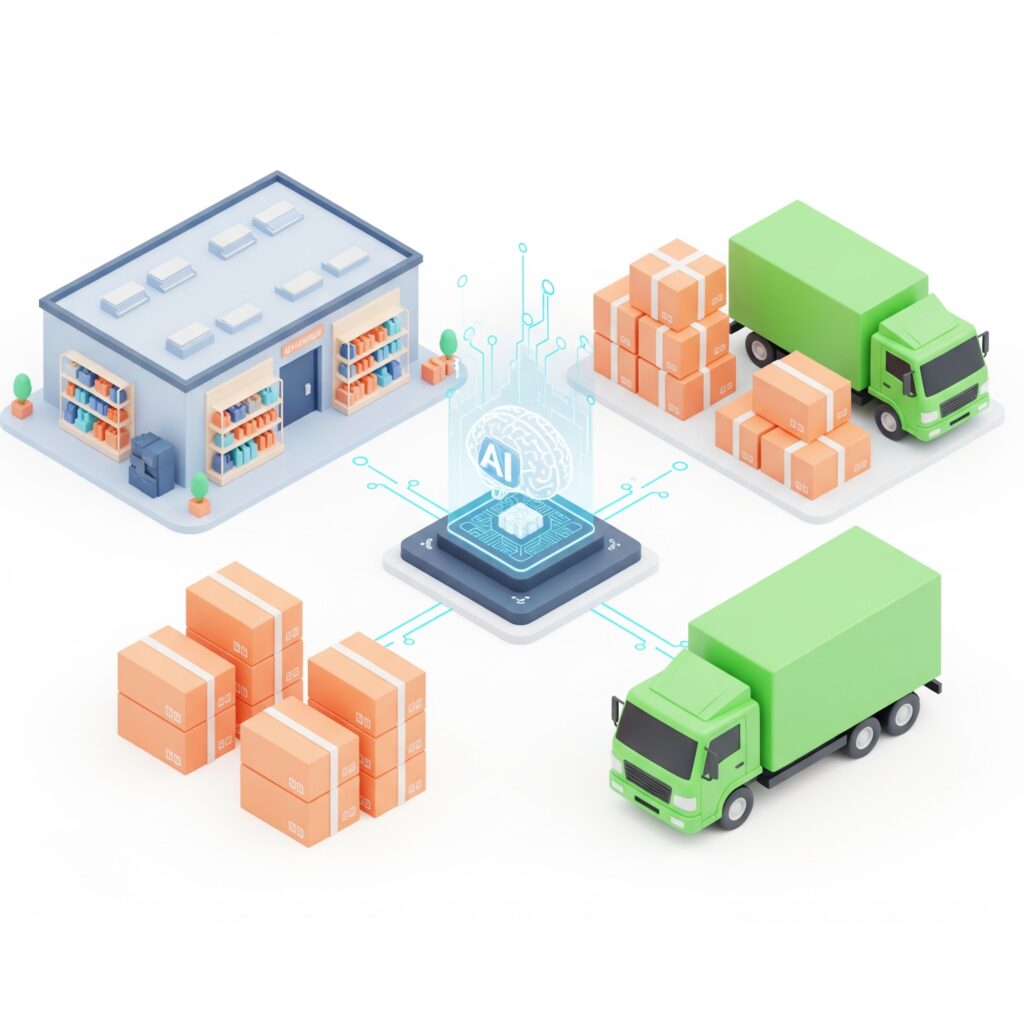
Retail supply chains generate thousands of ordering decisions daily. When these decisions rely on manual processes, the result is predictable: out-of-stocks, excess inventory, and avoidable write-offs. Retano SCM automates the entire replenishment cycle — from cleaning and analyzing sales data to calculating order quantities and submitting orders across all stores and distribution centers.
Why Retailers Choose Retano SCM

Retano SCM is a SaaS-based solution that automates inventory management and replenishment for retail chains, powered by machine learning and big data analytics.

Suitable for retailers of any size, format, and product range seeking rapid improvement in supply chain quality.

Quick Launch. Fast Results.
Deployed in 3–6 months. Documented results include reduced out-of-stocks, lower average inventory, and fewer product write-offs within the first few weeks of launch.

No additional hardware or server infrastructure needed.

Compatible with any ERP solution used by retailers.

Seamless integration without requiring changes to merchandising, store management systems, or WMS.
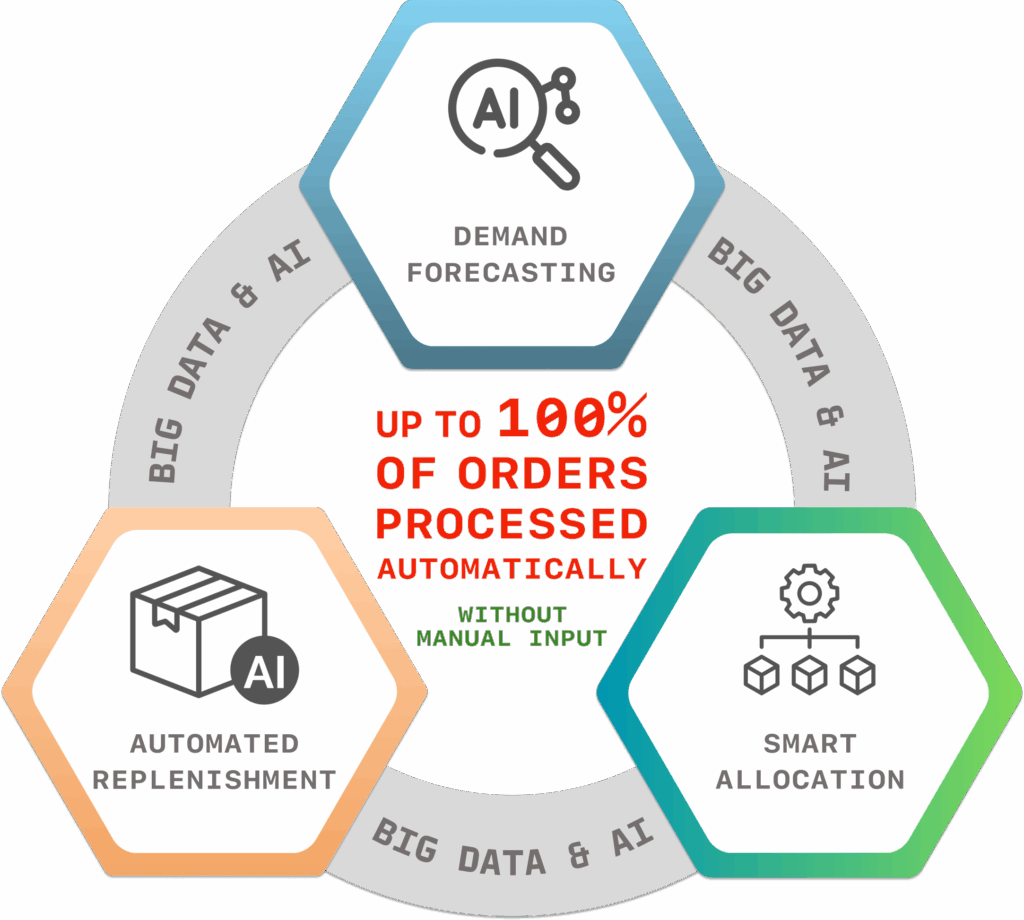
Manual intervention is only necessary for exceptions.
What’s more, the system pinpoints the precise areas requiring attention.
Full-cycle Automated replenishment
The system independently and automatically, every day:
- Cleans and analyzes sales and inventory data.
- Forecasts demand with consideration for seasonality, promotions, trends, and holidays.
- Calculates the optimal order quantity for each item.
- Adjusts orders based on actual stock levels and expiration dates.
- Generates ready-to-send orders — approved automatically on schedule or confirmed by a manager.
Retano SCM calculates order quantities based on demand forecasts, lead times, pack sizes, and shelf-life constraints — maintaining product availability while keeping inventory at the level required to meet target service levels.
Leonardo: Built-in AI Assistant That Makes Every Replenishment Decision Transparent
Retano AI-assistant is designed to transform complex supply chain tasks into transparent, repeatable, and high-quality decisions.
Leonardo shows which demand parameters, safety stock values, and supply chain constraints shaped each order quantity. The assistant aggregates daily alerts by root cause, rather than flooding the team with individual notifications, and answers questions about replenishment logic directly in context, without switching to another system.

What Leonardo changes for the Operations Team
- Prioritized Focus: The assistant generates a daily alert summary, pinpoints the most critical issues, and helps your team quickly determine priorities.
- Reduced Workload: By automating analytical breakdowns and providing instant rationale, the assistant supports the main SCM operational scenarios and significantly reduces the workload on the team.
Supply Chain Challenges Retano SCM Solves
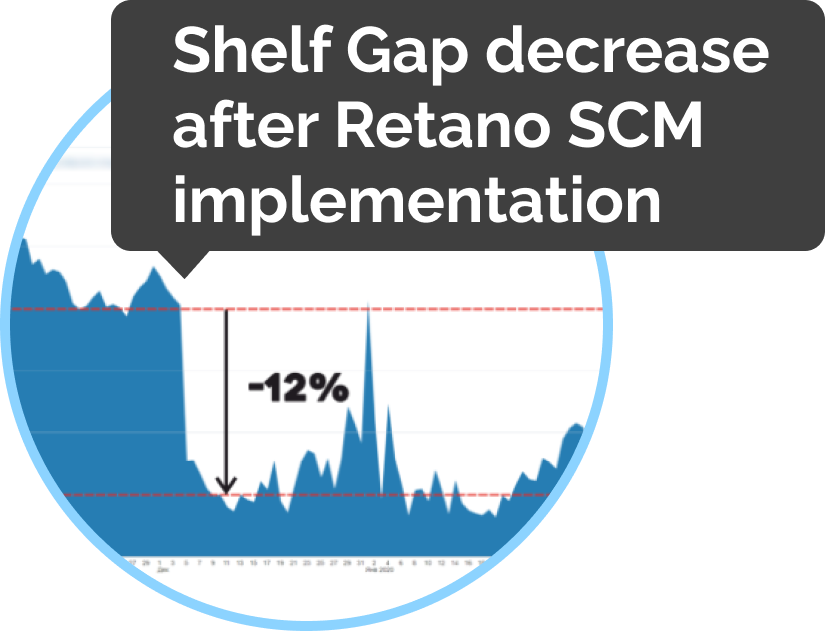
Reducing Out-of-Stocks and Lost Sales on Every Shelf
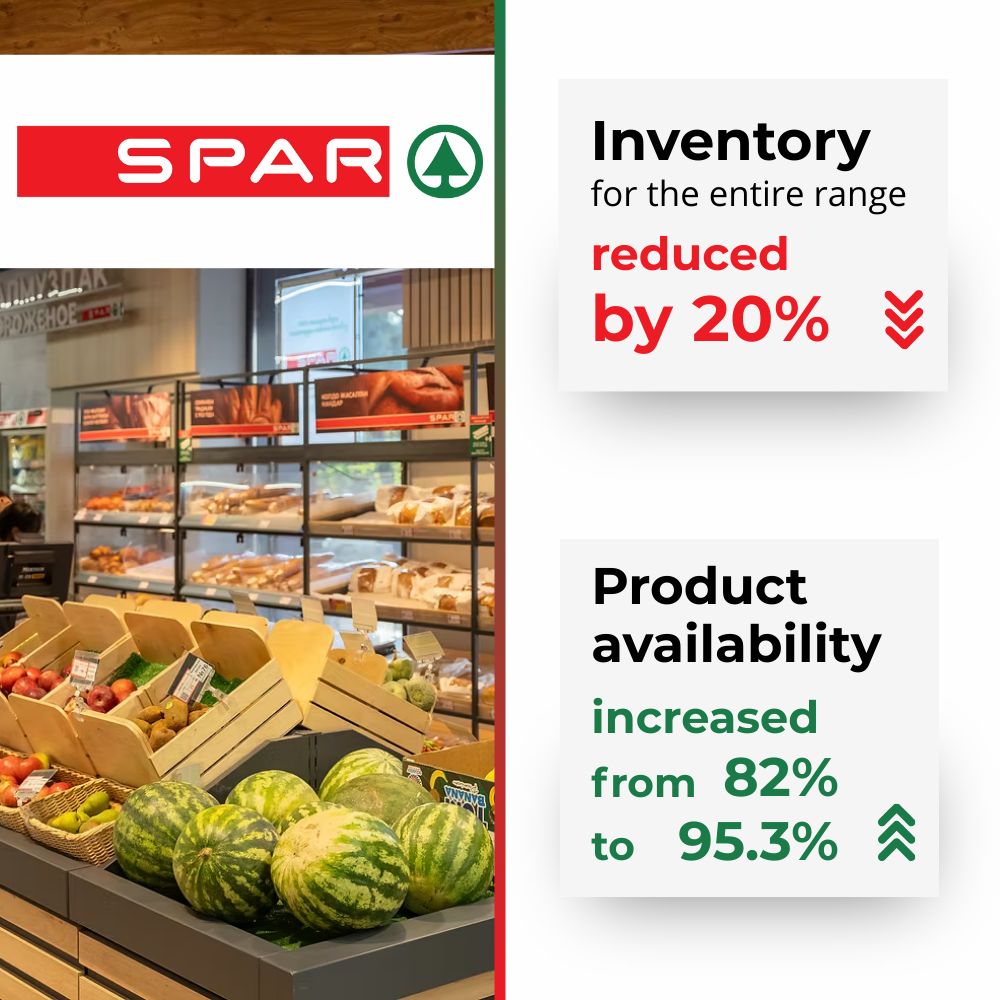
Gaps on shelves — particularly for short-shelf-life products — reduce sales volume and, over time, push items out of the active assortment entirely. Retano SCM addresses this by calculating replenishment at the SKU–store level, factoring in current inventory, shelf life, and delivery frequency to maintain consistent availability. When out-of-stock events decrease, the positive effect compounds: higher fill rates support revenue, reduce write-offs, and protect the long-term viability of the assortment.
Inventory Optimization: releasing tied-up working capital
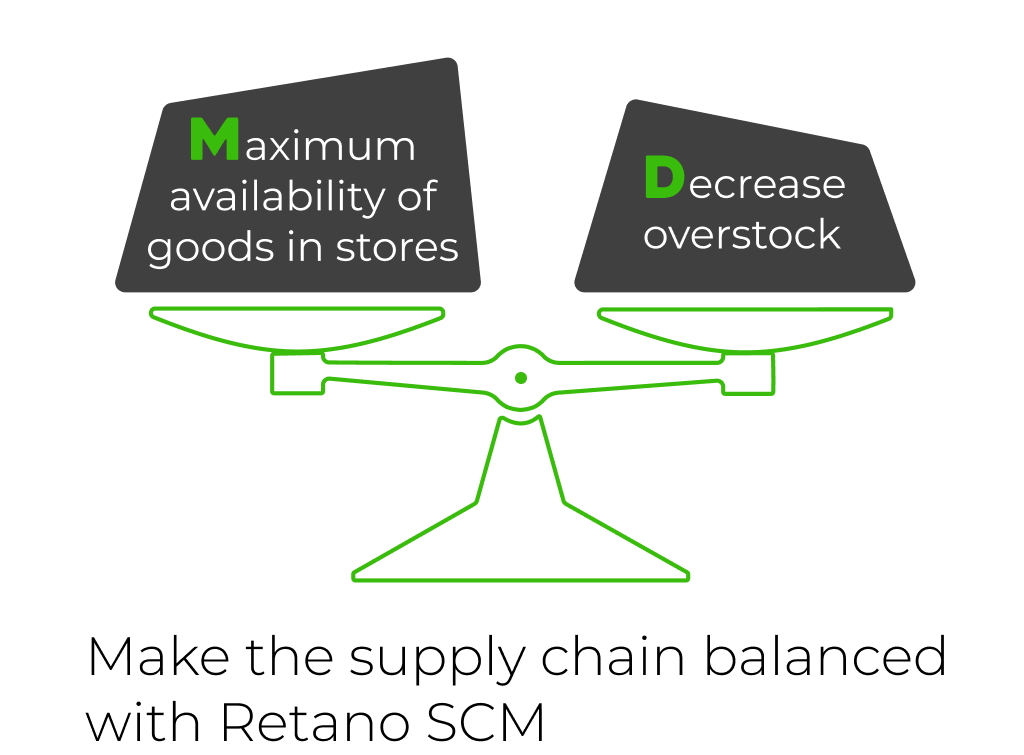
Excess inventory locks up working capital and drives up write-off rates at the same time. Retano SCM aligns order quantities to actual demand forecasts, keeping stock at the level truly needed — no more. As inventory stays lean, fewer products reach their expiration date, which means fewer write-offs. The result is freed-up working capital and lower losses, without compromising shelf availability.
Logistics Cost Reduction Through Precise Order Sizing
Retano SCM coordinates replenishment for both stores and distribution centers, accounting for lead times, pack multiples, cut-off times, and DC inventory positions. Precise order sizing enables efficient logistics workflows — including cross-docking and pick-by-line operations — reducing delivery frequency and associated transportation costs.
Fewer manual corrections, consistent performance regardless of team expertise
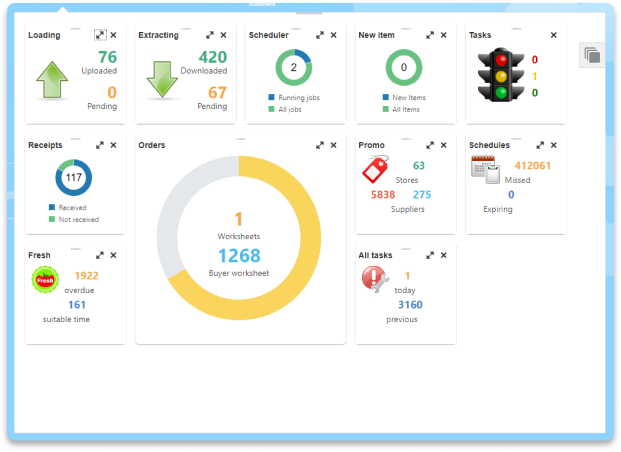
Retano SCM handles routine ordering decisions automatically, reducing manual corrections to exception handling. The system tracks supply chain KPIs in real time — making performance visible across the team. New team members work with the same replenishment quality as experienced specialists from day one, because the ordering logic resides in the system rather than in individual expertise.
Core Capabilities
Demand Forecasting: clean data as the foundation of accuracy
- Retano SCM builds forecasts on sales data cleaned from out-of-stock periods, anomalies, and promotional distortions. Seasonality, holidays, and predictable events are explicitly modeled — not excluded — so the baseline forecast remains stable when these events recur.
- A multi-level approach combines category-level trend detection with SKU-level modeling. For products with limited sales history — including new items — the system automatically identifies analogues and uses their demand patterns as a basis for the initial forecast.

The system evaluates multiple forecasting models per SKU and applies the one with the highest accuracy — without manual configuration.
Machine Learning Models that continuously learn from Your Data

Models adapt to your assortment and sales patterns — accuracy improves with every replenishment cycle.
Retano SCM applies machine learning models continuously updated as new transaction data arrives. The algorithms are adapted to retail’s operational conditions across all sales channels:
- Refine forecast accuracy over time as the system processes more data from your operations.
- Apply channel-specific logic for stores, e-commerce, wholesale, and marketplaces.
- Select demand analogues for new products automatically — so replenishment starts correctly even before sales history accumulates.
- Calculate promotional demand separately, accounting for discount depth, display placement, and seasonal context — without distorting the baseline forecast.
Ready to automate replenishment, reduce out-of-stocks, and release working capital tied up in excess inventory?
FAQ
Publications

Category management software for retail chains: a 2026 buyer’s guide
The full process — from category role to measuring the effect of a change For a retailer with ten stores, assortment management is an analysis problem: one person looks at the numbers and decides. For a chain of 80, 200 or 500 stores it becomes an operational discipline that touches commercial strategy, supplier negotiation, replenishment… Read More »Category management software for retail chains: a 2026 buyer’s guide

Retano at NRF Retail’s Big Show Europe 2026
Retano Solutions took part in NRF Retail’s Big Show Europe, held on 15–17 September 2026 at Paris Expo Porte de Versailles, presenting its AI-driven retail platform at Stand C-070 in Hall 6. NRF Retail’s Big Show Europe is the European edition of the retail industry’s flagship event, co-organised by the National Retail Federation and Comexposium.… Read More »Retano at NRF Retail’s Big Show Europe 2026
How do you spot a customer who is about to stop buying?
Churn prediction reads the change in each customer’s own purchase behaviour — visits spacing out, basket falling — and flags the risk while it is still forming. What the model needs, how Retano CRM & Loyalty prioritises the at-risk list by customer value, and what to send the people on it. In short Why doesn’t… Read More »How do you spot a customer who is about to stop buying?