


Retano ERP
Manage, control and perform merchandising activities.
Let AI summarize this article for you

Retano ERP is an industry-specific solution for retail management automation, catering to Grocery, FMCG, Droggery, DIY, and Household retailers of all sizes. The system is also ideal for franchising and distribution centers.
With Retano ERP, retailers can receive daily inventory data for all their stores with real-time updates.
It optimizes merchandising tasks, freeing up time for strategic goals.
The basics of high-quality management
The Retano ERP solution offers comprehensive master data input tools that cater to the specific needs of retailers. The system is designed to prevent the input of duplicated or incorrect SKUs, barcodes, and other item attributes or objects. By ensuring accurate master data, the system enhances the precision of analytics, forecasts, order quality, and transactional data across distribution centers, stores, and online channels. This accuracy contributes to improved operational efficiency and customer satisfaction.
The business process mechanisms within Retano ERP enable users to structure and control operations by creating predefined chains of steps and rules. These mechanisms provide real-time monitoring of the current execution stage for each process. At any given moment, executives can access information about active business processes, including the progress of each process instance and the assigned user responsible for each task. This ensures consistency in user actions, enhances systemization, and improves transparency within business processes.
Capabilities
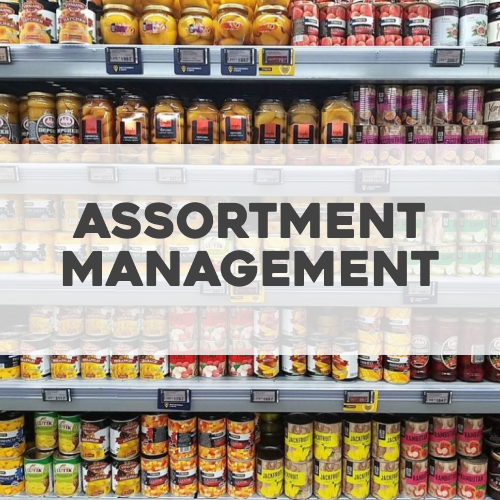
Building the right assortment for every store format
Assortment decisions rarely apply uniformly across a retail chain — a compact urban store and a large-format outlet need different ranges even within the same category. Retano ERP builds assortments from store-level parameters such as shelf capacity, location and format, then groups stores into clusters that reflect commercial strategy rather than a single centralized range. New items are approved through cluster-based rules tied to product attributes, keeping the assortment governed centrally while still adapting to local demand. This makes it possible to manage thousands of SKU–store combinations without maintaining parallel assortment structures.
More details
- Range generation based on segments and store parameters: shelf size, location, etc.
- Store clusters by category / format to align with commercial strategy
- Unlimited variants and attributes setup for easy and effective range management
- Approval of new items via store cluster strategy by product attributes
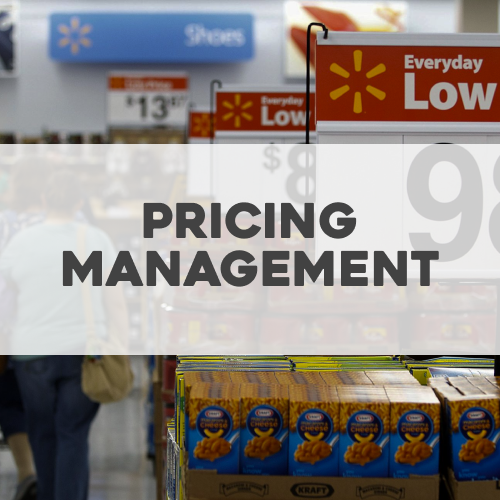
Governing prices across formats, margins and competition
Pricing at scale has to balance category margin targets, competitor positioning, regulatory constraints and the retailer’s own markup strategy — all at once, across every store. Retano ERP configures pricing guidelines around these inputs, including KVI basket control and rounding rules, then calculates selling prices automatically according to the chosen strategy. It supports regular, promotional and clearance pricing in parallel, and suggests price updates when supplier costs change. Centralized control and coordination of these guidelines reduce the risk of pricing errors as the number of stores and price zones grows.
More details
- Tailored pricing guidelines considering brands, store formats, product categories, and competitive landscape
- Automated pricing guidelines configuration based on KVI basket control, target category margin, competitors’ prices, regulatory rules, and markup strategies
- Price rounding guidelines
- Control and coordination of pricing guidelines
- Automated selling price calculation based on selected pricing strategy
- Automated price suggestions on cost change
- Regular, promo and clearance pricing
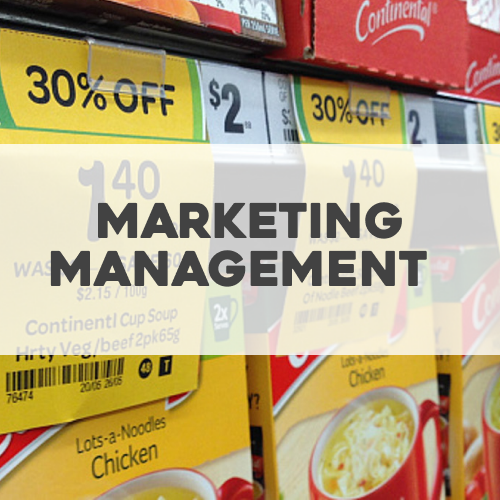
Planning promotions and tracking competitive activity
Effective retail marketing depends as much on measuring outcomes as on planning events. Retano ERP covers the full cycle of marketing event planning and budgeting, then measures promotion effectiveness so spend can be judged against results. It also maintains a per-store, per-category competitor list with pricing monitoring, giving commercial teams visibility into the local competitive landscape. Built-in mechanisms for gathering range-expansion suggestions turn store-level observations into structured input for assortment decisions.More details
More details
- Marketing event planning
- Marketing event budget formation
- Promotion effectiveness analysis
- Competitor list for each store by category
- Competitor pricing monitoring
- Mechanisms for gathering product range expansion suggestions
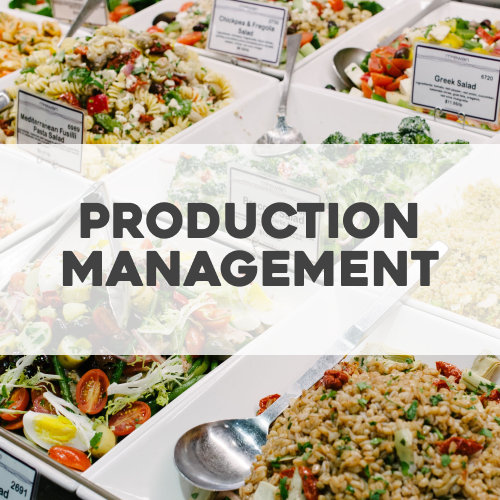
Managing in-store and central production
Retailers with bakery, deli or ready-to-eat production run a manufacturing process inside a retail operation, with its own costing and planning needs. Retano ERP handles production technology maps, ingredient quantity calculation and the costing of finished goods, alongside replenishment of production warehouses. It supports planning and launching new products, and controls execution against plan through plan/fact analysis. This connects own-production activity to the same assortment, pricing and inventory logic used across the rest of the chain.More details
More details
- Cost of finished products and production warehouse replenishment
- Development of production technology maps
- Planning and production of new products
- Ingredient quantity calculation
- Control of the production of finished products
- Plan/fact analysis

Controlling supplier terms and commercial conditions
As supplier numbers grow, inconsistent contract terms become a direct source of margin leakage and disputes. Retano ERP centralizes supplier relationships and embeds commercial conditions — payment terms, prepayment and post-payment schemes, deals and bonuses — directly into operational processes. Contract payment calculation, automated debt and prepayment settlement, and vendor deal management keep those conditions applied consistently during ordering and pricing. It also covers control of import supplies and trade management, so contract terms hold up across the full procurement flow.
More details
- Control of import supplies
- Centralized supplier relationships
- Contract payment calculation
- Various payment terms for products: prepayment, post-payment, etc.
- Automated debt and prepayment payments
- Trade management
- Supplier and Vendor Deals Management
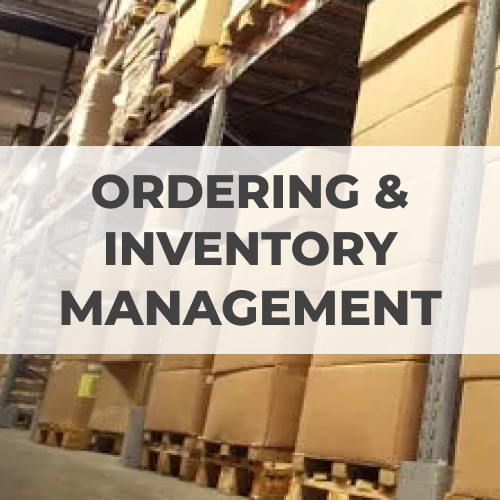
Automating ordering across stores and distribution centers
Ordering is where assortment, pricing and supplier decisions turn into physical stock movement, and manual handling at scale is slow and error-prone. Retano ERP automates order calculation on schedules defined for individual stores and DCs, with a parameter master governing how each order is built, plus manual ordering where needed. Orders can be consolidated by supplier using cross-docking and pick-by-line, dispatched via EDI or email, and confirmed with ASN management. Automated order-closing settings keep the process moving without constant intervention as volumes rise.More details
More details
- Automatic ordering parameters master
- Order calculation scheduling for stores and DCs
- Manual Ordering
- Order consolidation by supplier. «Cross-docking» & «Pick-by-line»
- Order dispatching (EDI, email, etc)
- Order confirmation and ASN management
- Order closing automation settings
Fulfilling online orders with consistent pricing and delivery
Omnichannel retail only works when online and in-store operate on the same data rather than as separate systems. Retano ERP’s order management system fulfills orders coming from the retailer’s sales channels and tracks each one through every stage, from receipt to delivery at the customer’s door. Prices stay relevant and consistent across all channels, drawing on the same pricing logic used in stores. Delivery options — click & collect, ship-to-store, home delivery and pick-up points — are handled within one process, so channel choice doesn’t fragment fulfillment.More details
More details
- The omnichannel order management system (OMS) for fulfilling orders quickly and efficiently
- Tracking the order at all stages of processing – from receipt to the door of the customer
- Relevant and consistent prices in all channels
- Various order delivery options, including: click & collect, to the store, to customer’s home, to pick-up points
FAQ
Publications
Category management software for retail chains: a 2026 buyer’s guide
The full process — from category role to measuring the effect of a change For a retailer with ten stores, assortment management is an analysis problem: one person looks at the numbers and decides. For a chain of 80, 200 or 500 stores it becomes an operational discipline that touches commercial strategy, supplier negotiation, replenishment… Read More »Category management software for retail chains: a 2026 buyer’s guide

Retano at NRF Retail’s Big Show Europe 2026
Retano Solutions took part in NRF Retail’s Big Show Europe, held on 15–17 September 2026 at Paris Expo Porte de Versailles, presenting its AI-driven retail platform at Stand C-070 in Hall 6. NRF Retail’s Big Show Europe is the European edition of the retail industry’s flagship event, co-organised by the National Retail Federation and Comexposium.… Read More »Retano at NRF Retail’s Big Show Europe 2026
How do you spot a customer who is about to stop buying?
Churn prediction reads the change in each customer’s own purchase behaviour — visits spacing out, basket falling — and flags the risk while it is still forming. What the model needs, how Retano CRM & Loyalty prioritises the at-risk list by customer value, and what to send the people on it. In short Why doesn’t… Read More »How do you spot a customer who is about to stop buying?